
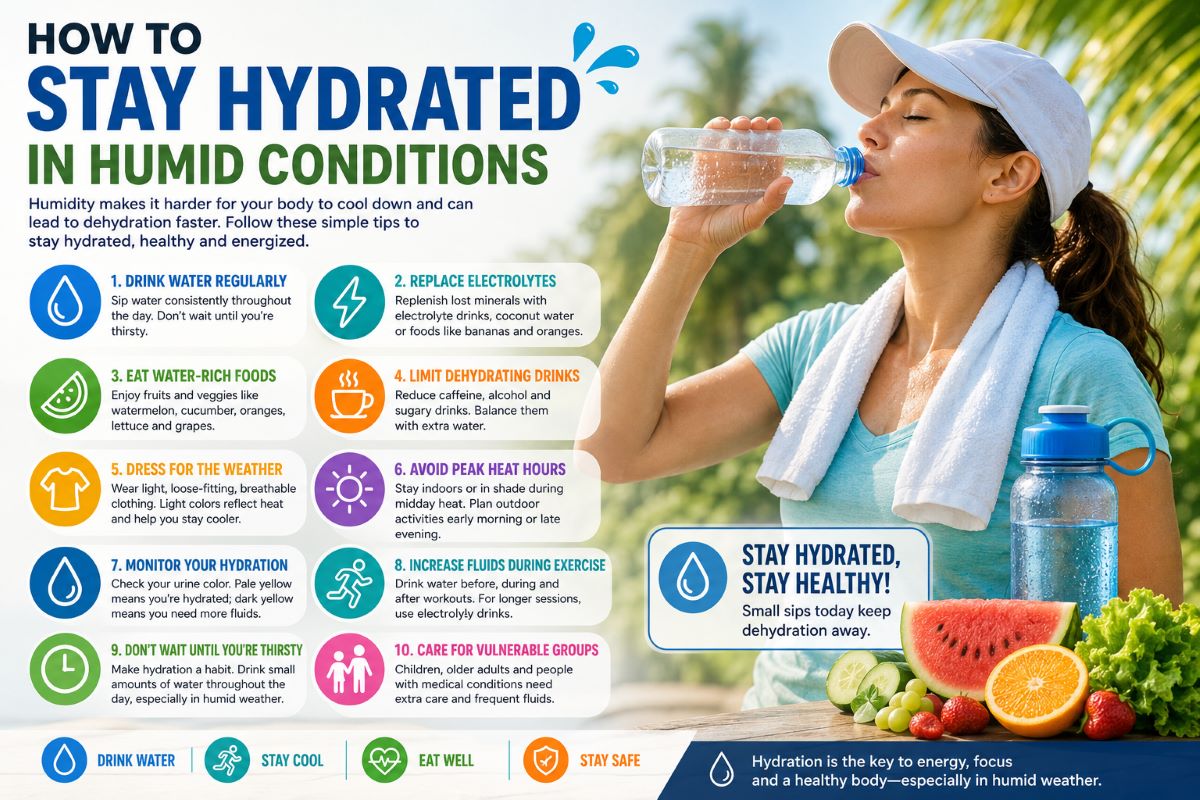
Hot and humid weather can be particularly challenging for the human body. Unlike dry heat, humidity slows down the evaporation of sweat, making it harder for your body to cool itself efficiently. As a result, you may sweat more, lose essential fluids and electrolytes faster, and become dehydrated without realizing it. Whether you’re living in a humid climate like UAE, working outdoors, exercising, or traveling, staying hydrated is essential for maintaining your health, energy, and overall well-being.
- Drink Water Regularly
The most effective way to stay hydrated is to drink water consistently throughout the day rather than waiting until you feel thirsty. Thirst is often a late indicator of dehydration. Aim to sip water every 20–30 minutes during outdoor activities or prolonged exposure to humid weather. Keep a reusable water bottle with you to make hydration convenient wherever you go.
- Replace Lost Electrolytes
Sweating doesn’t just cause water loss—it also depletes important minerals such as sodium, potassium, magnesium, and calcium. During extended periods of physical activity or excessive sweating, replenish these electrolytes by drinking oral rehydration solutions, electrolyte beverages, or consuming natural sources like coconut water, bananas, oranges, and yogurt. Maintaining electrolyte balance helps prevent muscle cramps, fatigue, and dizziness.
- Eat Water-Rich Foods
Hydration comes from both beverages and food. Fruits and vegetables with high water content provide fluids along with essential vitamins and minerals. Excellent choices include watermelon, cucumber, strawberries, oranges, lettuce, celery, tomatoes, and grapes. Including these foods in your daily meals can significantly improve your hydration levels.
- Limit Dehydrating Drinks
Certain beverages can contribute to fluid loss if consumed in excess. Drinks high in caffeine, alcohol, or sugar may increase dehydration, particularly during hot and humid weather. While moderate coffee or tea consumption is generally acceptable, balance each caffeinated or alcoholic beverage with additional water to compensate for fluid loss.
- Dress for the Weather
Lightweight, loose-fitting, and breathable clothing made from cotton or moisture-wicking fabrics helps your body regulate temperature more effectively. Light-colored clothing reflects sunlight and reduces heat absorption, minimizing excessive sweating and fluid loss.
- Avoid Peak Heat Hours
Whenever possible, schedule outdoor activities during the early morning or late evening when temperatures and humidity levels are lower. If you must be outside during the hottest part of the day, take frequent breaks in shaded or air-conditioned areas to allow your body to cool down.
- Monitor Your Hydration
Your urine color is one of the simplest indicators of hydration. Pale yellow urine generally indicates good hydration, while dark yellow or amber-colored urine often signals that you need more fluids. Other signs of dehydration include dry mouth, headache, dizziness, fatigue, muscle cramps, and reduced urine output. Address these symptoms immediately by drinking fluids and resting in a cool environment.
- Increase Fluid Intake During Exercise
Physical activity significantly increases sweat production in humid conditions. Drink water before, during, and after exercise. For workouts lasting longer than an hour, consider electrolyte replacement beverages to restore both fluids and minerals lost through sweat.
- Don’t Wait Until You’re Thirsty
Many people underestimate how quickly dehydration develops in humid weather because sweat evaporates less efficiently. Develop a habit of drinking small amounts of water consistently throughout the day, especially if you spend time outdoors or work in physically demanding environments.
- Pay Special Attention to Vulnerable Groups
Children, older adults, pregnant women, and people with chronic medical conditions are more susceptible to dehydration. Ensure they have easy access to water, encourage frequent fluid intake, and monitor them closely during periods of high heat and humidity.
Staying hydrated in humid conditions requires more than simply drinking water when you’re thirsty. A combination of regular fluid intake, electrolyte replacement, water-rich foods, appropriate clothing, and smart scheduling of outdoor activities can help your body cope with the challenges of heat and humidity. By making hydration a daily habit and recognizing the early signs of dehydration, you can stay healthy, active, and comfortable even in the most humid environments.
Contributed by GuestPosts.biz
