
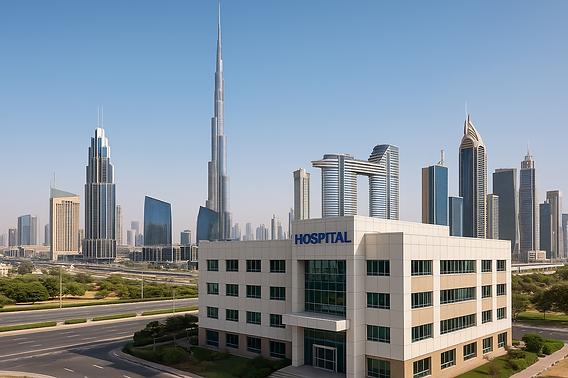
Over the last decade, Dubai’s healthcare industry has undergone a remarkable transformation. What was once primarily focused on providing essential medical services has evolved into a sophisticated, technology-driven and internationally competitive healthcare ecosystem. Rising population, economic growth, medical tourism, private-sector investment and government initiatives have all contributed to this evolution. Today, Dubai is recognized as one of the leading healthcare hubs in the UAE and the wider Middle East.
One of the biggest changes has been the expansion of healthcare infrastructure. Over the past 10 years, Dubai has witnessed the development of new hospitals, specialist medical centers, outpatient clinics and diagnostic facilities. Both government and private healthcare providers have invested in modern infrastructure and advanced medical equipment. The growth of specialist centers has also given patients greater access to areas such as oncology, cardiology, orthopedics, fertility treatment, neurology, cosmetic medicine and advanced surgery.

The Dubai Health Authority has played an important role in regulating and developing the sector. Over the decade, healthcare regulation has become increasingly sophisticated, with greater emphasis on quality, patient safety, licensing and international standards. These developments have helped create greater confidence among residents, healthcare professionals and international patients.
Technology has arguably been the most significant driver of change. Ten years ago, many healthcare processes still depended heavily on physical records, face-to-face consultations and traditional diagnostic methods. Today, digital health has become an integral part of the patient experience. Electronic medical records, online appointment systems, telemedicine, mobile health applications and digital insurance services have made healthcare more accessible and convenient.
The COVID-19 pandemic accelerated this digital transformation dramatically. Telemedicine and remote consultations expanded rapidly as healthcare providers sought to maintain access to medical services while reducing unnecessary physical contact. The pandemic also demonstrated the importance of digital infrastructure, data management and healthcare preparedness. Many of the technologies and processes introduced or accelerated during this period have continued to influence healthcare delivery.
Artificial intelligence is now emerging as another major force. Healthcare organizations are exploring AI for medical imaging, diagnostics, patient monitoring, administrative automation and personalized healthcare. Although AI is not replacing doctors, it is increasingly being used as a tool to help medical professionals analyze information and make more informed decisions. Dubai’s broader smart-city strategy has created a favorable environment for the adoption of these technologies.
Medical tourism has also expanded considerably. Dubai has positioned itself as a destination for patients seeking high-quality medical services combined with excellent hospitality and international connectivity. Over the last decade, hospitals and clinics have increasingly developed services aimed at international patients. Cosmetic procedures, dental treatments, fertility services, orthopedics, wellness and specialist treatments have become important parts of the medical tourism ecosystem.
Another important development has been the growth of the private healthcare sector. International healthcare groups and regional providers have invested in hospitals, clinics and specialist facilities. Competition has encouraged providers to improve patient experience, introduce advanced technologies and offer increasingly specialized services. Dubai’s multicultural population has also encouraged healthcare organizations to develop multilingual and culturally sensitive services.
The definition of healthcare itself has expanded. There is now greater emphasis on preventive medicine, wellness, early diagnosis and healthy lifestyles rather than simply treating illness. Health screening programs, fitness initiatives, nutrition services and chronic disease management are increasingly integrated into the healthcare landscape.
Looking ahead, Dubai’s healthcare sector is likely to become even more technology-driven. AI, robotics, precision medicine, genomics, wearable devices and remote patient monitoring could reshape how healthcare is delivered. At the same time, investment in medical research, biotechnology and specialized treatments could further strengthen Dubai’s position as a regional healthcare center.
The past decade has therefore been a period of profound transformation. Dubai has moved from expanding basic healthcare capacity to building an advanced, digitally connected and internationally oriented healthcare ecosystem. With continued investment and innovation, the next decade could be even more transformative for healthcare in Dubai and the wider UAE.

