
Many people in Dubai wake up with a sore jaw, notice a click when they chew, or live with headaches that painkillers barely touch. Most put it down to stress or poor sleep. Often, though, the cause is the temporomandibular joint, or TMJ, the small joint that connects the lower jaw to the skull.
What is a TMJ disorder?
The TMJ works like a hinge and a slide at the same time, and it moves every time you talk, chew or swallow. When the joint, the surrounding muscles or the bite stop working in balance, the result is a temporomandibular disorder (TMD), commonly called a TMJ disorder.
Common signs include:
- pain or tiredness in the jaw, especially in the morning
- clicking, popping or grinding sounds when opening the mouth
- a jaw that locks or does not open fully
- tension headaches or pain around the temples
- clenching or grinding the teeth at night (bruxism)
- ear pain or a feeling of fullness without an ear infection
- teeth that are worn, chipped or sensitive
Because these symptoms appear in different parts of the head and face, TMJ problems are frequently mistaken for migraines, ear problems or simple stress.
Why is it so common in Dubai?
Stress is one of the main triggers for clenching and grinding, and busy schedules, long working hours and frequent travel all add to it. Long periods at a laptop or phone can affect head and neck posture, which also loads the jaw muscles. Past orthodontic work, missing teeth or dental restorations that change the bite can play a part too.
How is a TMJ disorder diagnosed?
A proper diagnosis looks at the whole system: the joint, the muscles and the way the teeth meet. At DentalDate TMJ Institute in Dubai, assessment follows the principles of the Austrian-German school of gnathology and functional dentistry, which treats the jaw joint, bite and muscles as one system.
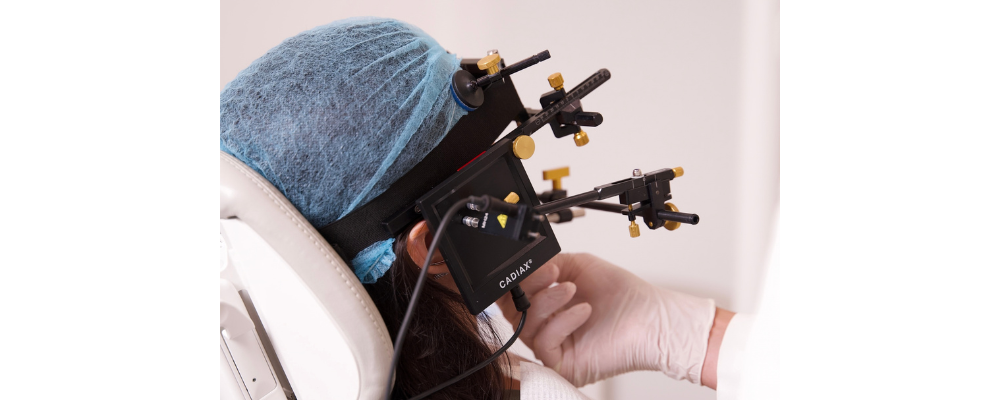
Along with a clinical examination, instrumental methods can be used, such as condylography, which records how the jaw joint actually moves, together with functional analysis of the bite and 3D CBCT imaging. The aim is to find the underlying cause rather than only relieve the symptoms.
What treatment options are there?
Treatment depends on the cause, but it often starts with conservative steps:
- Splint therapy. Custom-made splints can relax overworked muscles or guide the jaw into a more stable position.
- Bite correction. Where the way the teeth meet is part of the problem, the bite can be adjusted, sometimes with orthodontic treatment.
- Habit and lifestyle changes. Awareness of daytime clenching, a soft diet during flare-ups, and stress management all help.
Most people improve without surgery when the problem is diagnosed early.
When should you see a specialist?
It is worth booking a TMJ assessment if jaw pain or clicking lasts more than a few weeks, if your jaw locks, if headaches keep returning without a clear cause, or if a dentist has noticed signs of grinding. The earlier the cause is found, the simpler treatment usually is.
About DentalDate TMJ Institute
DentalDate TMJ Institute is a specialist dental clinic in Dubai, with locations at City Walk and in Jumeirah. The clinic focuses on the diagnosis and treatment of temporomandibular joint (TMJ) disorders using protocols based on the Austrian-German school of gnathology and functional dentistry, alongside general, aesthetic, orthodontic and paediatric dentistry. Its multilingual team speaks English, Russian and Arabic.

