
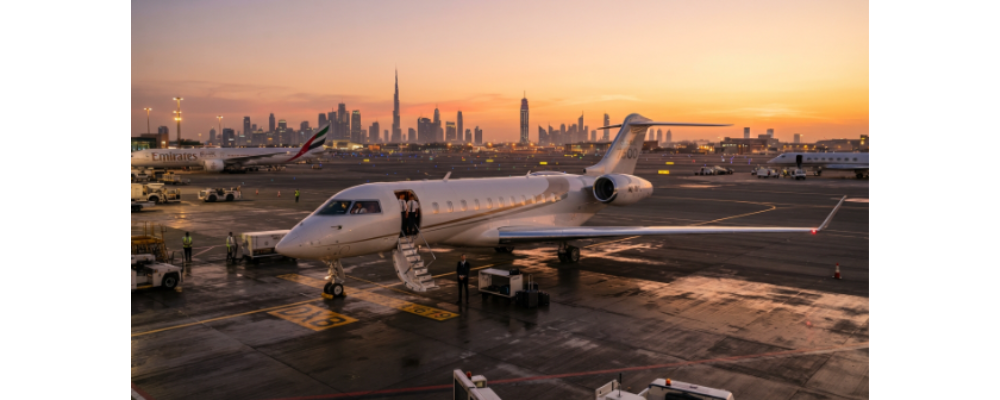
More than a busy airline corridor connects Dubai and London. Business ties, family connections, education and healthcare keep people moving between the two cities all year, and summer adds a steady flow of residents escaping the Gulf heat. For travellers who need a specific departure time, a quieter cabin or a direct route to a smaller London airfield, a private jet changes how the journey works.
The trade-off is cost, and prices on this route are rarely published in one place. This guide sets out what a Dubai-to-London private jet typically costs, how long the flight takes, which aircraft can fly it nonstop, and what passengers can do to arrive in good shape after roughly seven hours in the air.
How Much Does a Dubai to London Private Jet Cost?
| Aircraft category | Example aircraft | Typical seats | Nonstop Dubai to London? | Approximate one-way cost |
| Super midsize | Challenger 350, Citation X | 8 to 10 | Marginal, often needs a fuel stop | From around $50,000 |
| Heavy jet | Challenger 605, Falcon 2000LX | 10 to 13 | Yes, in most conditions | Around $55,000 to $85,000 |
| Ultra long range | Global 6000, Falcon 7X, Gulfstream G650 | 13 to 16 | Yes, with margin to spare | Around $90,000 and above |
These figures are only a guide. Final quotes depend on the date, the aircraft actually available, and the charges covered in the quote.
Chartering a private jet between Dubai and London is priced per trip rather than per seat, which means the same quote covers one passenger or a full cabin. For most travellers, the figure lands somewhere between the mid-$50,000s and around $100,000 one way, depending on the aircraft category and the time of year.
Aircraft choice also affects the overall cost. Route data published by JetFinder puts approximate 2026 pricing on the London and Dubai corridor at around $82,900 one way for a heavy jet such as the Challenger 605 and around $94,500 for an ultra-long range jet. The same route data estimates the flight at about 7 hours 28 minutes over 5,498 km and notes that the reverse direction is priced the same way. Other broker estimates on the route start lower for smaller or older aircraft, though those options may carry a fuel stop.
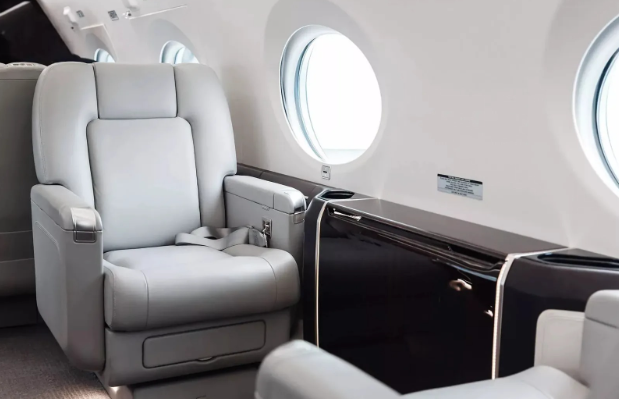
Group size and purpose of travel determine which of these categories is most appropriate. Families travelling together, executives flying with colleagues, and patients moving between linked providers, such as King’s College Hospital London and its Dubai hospital, often need more cabin space, baggage room or the ability to rest lying flat. Those needs tend to push the booking towards heavy and ultra-long-range jets rather than the cheapest available aircraft.
How Long Is the Flight From Dubai to London?
The great-circle distance between Dubai and London is about 5,500 km (roughly 2,970 nautical miles). On a heavy or ultra-long-range business jet, the flight usually takes between 6 hours 30 minutes and 7 hours 30 minutes.
Several things affect that number. Faster aircraft, such as the Gulfstream G650 or Bombardier Global series, cruise at higher speeds than a Challenger 605, which trims time off the trip. Winds matter as well. Jet streams, the bands of fast west-to-east air that the US National Weather Service notes can exceed 275 mph, sit close to the altitudes where business jets cruise. Flying against them tends to slow westbound flights, so the Dubai to London leg often runs a little longer than the return journey from London to Dubai.
Routing and air traffic control also play a part. Airspace restrictions across parts of the Middle East and Eastern Europe can push flights onto longer tracks, and the specific London airport chosen affects arrival sequencing. Smaller jets that cannot cover the distance in one go need a technical stop for fuel, which typically adds an hour or more once landing, refuelling and departure are factored in.
The time difference is worth planning around too. Dubai runs on Gulf Standard Time (GMT+4) all year, while the UK switches between GMT and British Summer Time. That puts London four hours behind Dubai in winter and three hours behind in summer, so a flight leaving Dubai at 10:00 can land in London in the early afternoon local time.
Which Aircraft Fly the Route Nonstop?
On a Dubai to London flight, range is the key consideration. At close to 3,000 nautical miles, the route sits at the upper edge of what a super midsize jet can manage once fuel reserves and westbound headwinds are included. In practice, many operators plan a stop in Southern or Eastern Europe for these aircraft, which saves money but adds time.
Heavy jets such as the Challenger 605 and Falcon 2000LX handle the distance nonstop in most conditions. They offer a stand-up cabin, a proper galley and enough baggage space for a longer stay. For a group of six to ten people, this category usually offers the best balance of comfort and cost.
Ultra-long-range aircraft, including the Bombardier Global 6000 and Global 7500, the Dassault Falcon 7X and the Gulfstream G650, fly the route with plenty of range to spare. Many of these cabins are configured with separate zones, beds and a shower on larger models. They cost more, but for overnight departures or passengers who need to sleep well before a meeting or appointment, the extra space can be worth it.
Departure and Arrival Airports
In Dubai, most private flights use either Dubai International Airport (DXB) or Al Maktoum International Airport at Dubai World Central (DWC). DXB is closer to the city centre and business districts, while DWC is about 45 km south-west of DXB and is often easier for business aviation, with less congestion and more flexible parking and slots. Sharjah International Airport is another option for travellers based in the northern parts of the city.
London offers a wider choice. Farnborough and Biggin Hill are dedicated business aviation airports with private terminals and efficient customs processing, and a large share of London charter traffic uses Farnborough. Luton and Stansted handle significant private jet volumes and suit travellers heading north of the city, while London City is closest to the financial district but has runway and aircraft size restrictions that rule out some larger jets.
The right pairing depends on where passengers are staying at each end. A flight that lands at Biggin Hill is well placed for south London and Kent, while Farnborough suits travellers heading to west London, Surrey or Hampshire.

What Changes the Final Quote?
Two quotes for the same Dubai to London trip can differ by tens of thousands of dollars. The main drivers are:
- Aircraft positioning. If the nearest suitable jet is based elsewhere, the cost of flying it to Dubai may be included.
- Season and demand. Summer departures from Dubai and major event dates in both cities push prices up.
- One-way versus return. An aircraft that must fly back empty often costs more per leg than a planned round trip. A multi-day stay, however, adds crew accommodation and parking fees.
- Airport and handling fees. Landing, parking, and handling charges can vary significantly from one airport to another.
- Catering and extras. Standard catering is usually included, while special menus and ground transport are extra.
Empty leg flights are the main exception to standard pricing. These are repositioning flights that operators sell at a discount, sometimes well below half the usual price. The catch is flexibility, since the operator’s schedule fixes the date, time and airports rather than the passenger’s.
UK Entry Requirements for Travellers From Dubai
Flying private does not change the rules for entering the UK. Passengers clear the same border checks as airline travellers, even if the process at a business aviation terminal is quicker.
Many visitors who do not need a full visa now require an electronic travel authorisation (ETA) before travelling to the UK. The ETA costs £20, allows visits of up to six months for tourism, family visits and certain other purposes, and every traveller, including children, needs their own. Nationals of the GCC states, including the UAE, are among those covered by the scheme, while expats living in Dubai should check the rules for their own nationality. Charter operators will ask for passport details in advance so they can file the passenger manifest.
Staying Well on a Seven-Hour Flight
A private cabin makes a long flight more comfortable, but it does not remove the physical effects of sitting for seven hours. Long journeys of more than four hours are a recognised risk factor for DVT (deep vein thrombosis), and a flight from Dubai to London easily exceeds that threshold.
The advice for long journeys is simple and easier to follow on a private jet than in an airline seat. Wearing loose clothing, drinking plenty of water, avoiding alcohol and getting up to walk around the cabin all help lower the risk. Passengers with existing risk factors, such as a previous clot, recent surgery or pregnancy, should speak to their doctor before flying.
Jet lag is milder on this route than on flights to Asia or North America, since the time difference is only three or four hours. It can still affect sleep and concentration for a day or two. The NHS guidance on reducing jet lag recommends adjusting sleep times gradually before travel, sleeping on board only if it is nighttime at the destination, limiting caffeine and alcohol, and getting outside in daylight after arrival. For a short trip of two or three days, keeping to Dubai time can sometimes be the better option.
Private Charter and Medical Travel
Medical travel runs in both directions on this route. UAE residents fly to London for specialist consultations and treatment, while Dubai has worked for years to position itself as a destination for international patients, a goal the Dubai Health Authority set out in its health tourism strategy.
For patients who are well enough to travel but want privacy, flexible timing and the option to lie flat, a standard private charter can be a practical choice. It allows a family member or carer to travel alongside and avoids long waits in busy terminals. Patients who need medical monitoring or care during the flight are a different case and requires a dedicated air ambulance with a trained medical crew, which is arranged and priced separately from a standard charter.
Frequently Asked Questions
How much does a private jet from Dubai to London cost?
A one-way private jet from Dubai to London typically costs between about $55,000 and $100,000. Heavy jets such as the Challenger 605 sit near the middle of that range, while ultra-long-range jets cost more. The final price depends on the date, aircraft availability and fees at each airport.
How long is a private flight from Dubai to London?
Most nonstop private flights from Dubai to London take between 6 hours 30 minutes and 7 hours 30 minutes. The exact time depends on the aircraft, winds and routing. Flights that need a fuel stop take longer.
Can a private jet fly nonstop from Dubai to London?
Yes, heavy and ultra-long-range jets can fly the route nonstop. Super midsize and smaller jets are close to or beyond their range limit on this distance, so operators often plan a fuel stop for them.
Is the flight from Dubai to London longer than the return?
Often, yes. Prevailing westerly winds at cruising altitude slow westbound flights, so Dubai to London usually takes a little longer than London to Dubai on the same aircraft.
Which Dubai airport is best for private jets?
Dubai International (DXB) and Al Maktoum International (DWC) both handle private jets. DXB is closer to central Dubai, while DWC is usually less congested and easier for business aviation slots and parking.
Which London airports do private jets use?
Farnborough, Biggin Hill, Luton, Stansted and London City all handle private flights. Farnborough and Biggin Hill are dedicated business aviation airports, while London City has size limits that rule out some larger jets.
Is it cheaper to book a round trip?
A round trip can work out better per leg than two separate one-way flights, because the aircraft would otherwise fly back empty. For longer stays, crew accommodation and parking fees can reduce that saving.
What is an empty leg flight?
An empty leg is a repositioning flight that an operator sells at a discount because the aircraft would otherwise fly without passengers. Prices can be far below standard charter rates, but the date, time and airports are fixed.
Do I need a UK ETA if I fly private?
Yes, if your nationality requires one. Entry rules are the same whether you arrive on an airline or a private jet, and each traveller needs their own ETA, including children.
How can I reduce the risk of DVT on a long private flight?
Wear loose clothing, drink plenty of water, avoid alcohol and walk around the cabin regularly. Anyone with a history of blood clots or other risk factors should speak to their doctor before travelling.
Planning the Trip
A Dubai to London private jet usually takes around seven hours and costs from the mid-$50,000s for a heavy jet to $90,000 or more for an ultra-long-range aircraft. Choosing the right aircraft category, the most convenient airport at each end, and a realistic departure time can make the biggest difference to both price and comfort. With entry paperwork in order and a few simple health habits on board, passengers can arrive in London ready for whatever brought them there.

