
This desk-job back pain guide for Dubai office professionals is written for anyone spending the majority of their working day seated, whether in a corporate office, a co-working space, or a home setup. Long hours at a desk, sustained laptop posture, and limited daily movement are now among the most common drivers of back pain in Dubai’s working population, and the problem is getting more widespread, not less.
This guide covers why desk work causes back pain, what makes it worse, how to set up your workspace, and when it’s time to get professional help.
Why Does Your Back Hurt After Sitting at a Desk All Day?
Sitting for extended periods places a surprisingly high level of load on the lumbar spine, higher, in fact, than standing. When you sit for hours without changing position, several things happen simultaneously that contribute to back pain from sitting at a desk:
- Muscle fatigue: The muscles supporting your spine, particularly the deep stabilisers and the lumbar extensors, are not designed to hold one position indefinitely. Over time, they fatigue, lose their ability to maintain proper alignment, and begin to place more stress on the passive structures of the spine.
- Postural collapse: As muscles tire, the natural tendency is to slump. The lower back flattens, the pelvis tilts backward, and the upper back rounds, increasing pressure on the discs and joints of the lumbar spine.
- Hip flexor tightening: Prolonged sitting shortens the hip flexor muscles at the front of the hip. Over time, this pulls the pelvis out of alignment and increases load on the lower back even when you’re standing or walking.
- Reduced circulation: Sitting compresses soft tissue and slows blood flow to the muscles of the lower back and legs, which can contribute to stiffness, discomfort, and slower recovery.
- Disc loading: The intervertebral discs absorb force throughout the day. Sustained sitting, particularly in a slumped position, increases the pressure within these discs, which over time can contribute to lower back pain from sitting all day and, in some cases, to disc-related problems.
The good news is that most desk-related back pain may respond well to relatively straightforward positive changes in how you sit, how often you move, and how your workspace is set up.
What Are the Common Desk Habits That Make Back Pain Worse?
Back pain at a desk is rarely caused by one single factor. It’s usually the cumulative effect of several small habits, repeated consistently over months or years. These are the most common ones we see:
- Slouching and postural collapse: The lower back rounds, the chin juts forward, and the shoulders hunch. This position dramatically increases spinal load and places excessive strain on the discs, joints, and surrounding soft tissue.
- Sitting for too long without breaks: Remaining in any one position for extended periods, even a good one, allows muscles to fatigue and joints to stiffen. The body needs movement to function well.
- Poor laptop and screen height: A laptop screen set too low pulls the head and neck into forward flexion for hours at a time, placing significant load on the cervical spine and contributing to both neck and upper back pain.
- Unsupported lower back: Chairs without adequate lumbar support allow the lower back to flatten or collapse, removing the natural lumbar curve that the spine depends on for load distribution.
- Crossing legs for prolonged periods: This creates an asymmetrical load through the pelvis and lower back, and can, over time, contribute to muscular imbalances and one-sided pain.
- Working from sofas, beds, or low surfaces: Informal work setups might feel comfortable initially, but they typically offer no postural support and consistently place the spine in compromised positions for extended periods.
- Looking down at a phone between tasks: For Dubai professionals who switch between screens, extended time looking down at a mobile device adds cumulative load to the neck and upper back.
How Should Dubai Professionals Set Up Their Desk to Reduce Back Pain?
Getting your workstation right doesn’t require expensive equipment. Most improvements can be made with what you already have. Use this checklist as a practical starting point for office ergonomics for back pain:
- Screen at eye level: The top of your screen should be roughly at eye level, so your neck stays in a neutral position. For laptop users, a separate keyboard and a laptop stand or monitor riser make this achievable.
- Chair height adjusted so feet are flat: Your feet should rest flat on the floor (or on a footrest), with your knees at roughly a 90-degree angle. Dangling feet or raised knees both affect pelvic alignment.
- Lumbar support in place: Your chair should support the natural inward curve of your lower back. If your chair doesn’t offer adequate support, a small rolled towel or a dedicated lumbar cushion placed at the small of your back works well as an immediate assistance, a key part of any workstation setup for back pain.
- Keyboard and mouse close to the body: Both should be positioned so your elbows stay close to your sides and your shoulders are relaxed. Reaching forward for your keyboard or mouse creates sustained tension in the upper back and shoulders.
- Elbows at desk height: Adjust your chair or desk so that your forearms are roughly parallel to the floor when typing, with elbows bent at around 90 degrees.
- Monitor distance: Your screen should be approximately an arm’s length away, close enough to read comfortably without leaning in, far enough to avoid eye strain.
A well-set-up workstation reduces the postural demands on your spine throughout the day. It doesn’t eliminate the need to move, but it means the time you do spend sitting is doing less damage.
What Is the Best Sitting Posture for Lower Back Pain at Work?
There is no single “perfect” posture and that’s an important point. Research consistently shows that it’s not any one position that causes problems, but rather staying in the same position for too long. That said, some postures place less strain on the spine than others, and understanding the principles of sitting posture for back pain helps you make better moment-to-moment choices throughout the day.
As a general guide for how to sit with lower back pain at work:
- Keep your lower back in contact with the chair’s lumbar support, maintaining the natural inward curve rather than flattening it.
- Sit with your weight distributed evenly across both sitting bones, and avoid leaning consistently to one side.
- Keep your hips at or slightly above knee level; this helps maintain the lumbar curve.
- Relax your shoulders down and back, not braced or held high. Your arms should rest comfortably without hunching.
- Keep your head balanced over your shoulders, with your chin gently tucked rather than jutting forward.
The most practical guidance, however, is this: your next position is your best position. Move regularly, vary how you sit, and don’t hold any posture, even a good one, for hours at a time.
How Often Should Desk Workers Move to Prevent Back Pain?
Movement is the single most effective tool a desk worker has for managing back pain, more effective than any chair, cushion, or ergonomic accessory. The spine is designed to move, and it responds poorly to sustained stillness regardless of the position you’re in.
There’s no universal rule that applies to everyone, but a general principle worth working toward is breaking up prolonged sitting every 30 to 60 minutes. This doesn’t need to be a formal exercise; the goal is simply to change position and get the body moving, even briefly.
Practical ways to build movement into your working day:
- Stand up and walk to a colleague’s desk rather than sending a message
- Take phone calls standing or walking when the call allows it
- Use a standing desk position for part of the day, alternating between sitting and standing
- Walk for 5 to 10 minutes at lunch rather than remaining seated
- Perform a few gentle stretches or movements at your desk between tasks
- Set a reminder on your phone or computer if you know you tend to lose track of time when focused
The cumulative effect of small, regular movement throughout the day is considerably more beneficial than a single workout at the gym followed by eight hours of unbroken sitting.
What Stretches Can Help Desk-job Back Pain?
Targeted movement and stretching can provide meaningful relief from the stiffness and discomfort that accumulates during a long working day. The following categories of stretches for desk job back pain address the areas most commonly affected by prolonged sitting:
- Gentle back mobility: Movements that encourage the lumbar spine to flex and extend, such as seated or standing cat-cow movements, help restore circulation and reduce stiffness in the lower back.
- Hip flexor stretches: Because the hip flexors shorten significantly during prolonged sitting, gentle hip flexor lengthening, such as a standing lunge stretch, can reduce the pull on the lower back and help restore pelvic alignment.
- Hamstring mobility: Tight hamstrings affect pelvic tilt and lower back load. Gentle seated or standing hamstring stretches help address this common contributor to desk-related back pain.
- Shoulder and upper back movement: Neck rolls, shoulder circles, and gentle chest-opening stretches address the tension that accumulates in the upper back and neck from sustained desk posture.
Important: These are general movement suggestions, not a prescribed exercise programme. If any stretch increases your pain, stop immediately. If your back pain is persistent, recurring, or accompanied by any symptoms in your legs, consult a physiotherapist, chiropractor, or osteopath before beginning any exercise routine.
Are Standing Desks Helpful for Back Pain?
Standing desks have become increasingly popular, particularly in Dubai’s modern office environments, and they can be a genuinely useful tool for reducing the amount of time spent sitting. However, the evidence around standing desks and back pain is more nuanced than their marketing often suggests.
Standing all day is not the solution. Extended periods of static standing can be just as problematic as extended sitting, creating their own forms of lower back, hip, and leg discomfort. The value of a standing desk lies not in standing more but in having the option to alternate between positions throughout the day.
What the evidence does support is this:
- Alternating between sitting and standing at regular intervals reduces the cumulative load on the spine compared to sitting all day
- Standing desks are most effective when used as part of a broader strategy that includes regular movement breaks and good posture awareness
- Anti-fatigue mats and appropriate footwear make standing desk use significantly more comfortable and sustainable
- Gradual introduction is important; moving from sitting all day to standing for hours immediately often leads to a different kind of discomfort
For Dubai office workers considering a standing desk, the practical recommendation is to use it to break up sitting time, aiming to alternate roughly every 30 to 60 minutes rather than as a replacement for sitting entirely.
When Should Office Workers See a Physiotherapist for Back Pain?
Many people manage desk-related back pain with stretching, posture adjustments, and movement breaks, and for mild, early-stage discomfort, that’s often appropriate. But there are clear signs that indicate professional assessment is the right next step. Consider seeing a physiotherapist if:
- Your back pain has lasted more than two to three weeks without meaningful improvement
- The pain returns regularly, even if each episode resolves, because recurring pain suggests an underlying pattern that self-management isn’t resolving
- Pain is spreading into your buttock, leg, or foot, or is accompanied by numbness or tingling
- You’re finding it difficult to sit, walk, bend, or perform daily tasks without significant discomfort
- Your sleep is being disrupted by back pain
- You’ve made ergonomic changes and adjusted your habits, but the pain has not improved
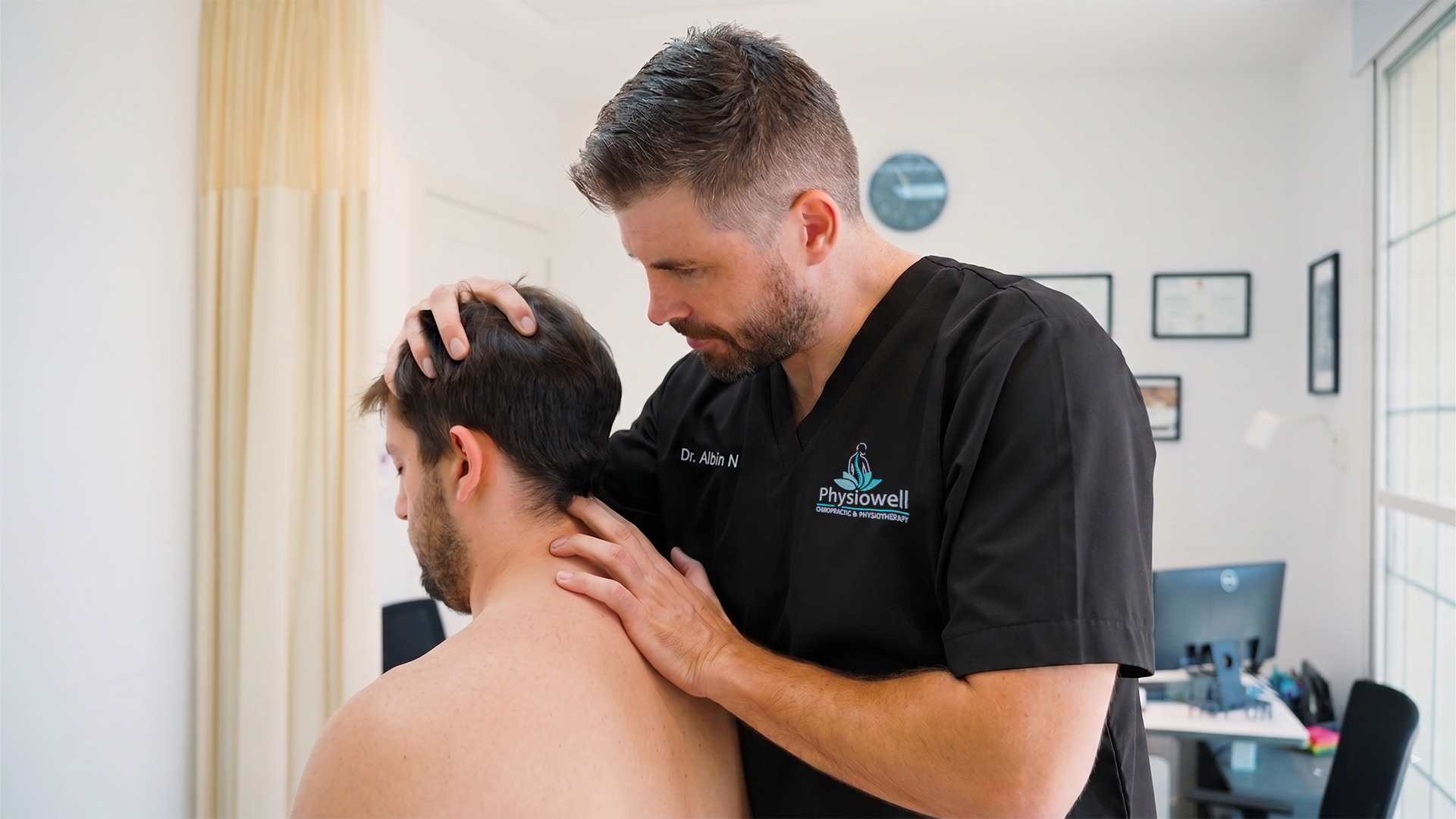
Physiotherapy for desk workers Dubai is a practical, evidence-based option, not a last resort. Early assessment typically leads to faster recovery and reduces the risk of a short-term problem becoming a chronic one. Physiotherapy for office workers Dubai, patients access at Physiowell begins with a thorough clinical evaluation to understand what’s driving your pain before any treatment begins.
How Can Physiotherapy Help Desk Workers with Chronic Back Pain?
For professionals whose back pain has become persistent or recurring, physiotherapy provides a structured pathway to recovery that goes beyond general advice. Here’s how office desk back pain treatment Dubai typically works at a clinical level:
- Posture and movement assessment: A physiotherapist evaluates how you sit, stand, and move — identifying the specific postural patterns and movement habits that are contributing to your pain, not just the symptoms themselves.
- Mobility improvement: Hands-on treatment and targeted exercise progressively restore the range of motion in the joints and soft tissues most affected by prolonged desk work.
- Strengthening: A structured programme addresses the specific weaknesses most commonly in the deep spinal stabilisers, glutes, and hip musculature, which may fail to support the spine adequately through a working day.
- Ergonomic advice: Your physiotherapist can provide specific, personalised guidance on your workstation setup advice that’s based on your body and your pain pattern, rather than a generic checklist.
- Pain management strategies: Including movement guidance, activity modification, and, where appropriate, manual therapy techniques to reduce pain and restore function.
Back pain treatment for office workers Dubai, through professionals in physiotherapy, is designed to address the root cause, not just provide temporary relief. The goal is lasting improvement that holds up through a full working week.
Where Can Dubai Professionals Get Help for Desk-related Back Pain?
If desk-related back pain is affecting your work, your sleep, or your quality of life, Physiowell offers clinical physiotherapy, chiropractic, and osteopathic assessments and treatment specifically designed for Dubai’s working professionals. Whether you’re dealing with a recent flare-up or years of recurring back pain, our team will assess what’s driving your symptoms and build a plan around your schedule and goals.
Getting assessed early is the most effective thing you can do, and it’s a straightforward process.
