
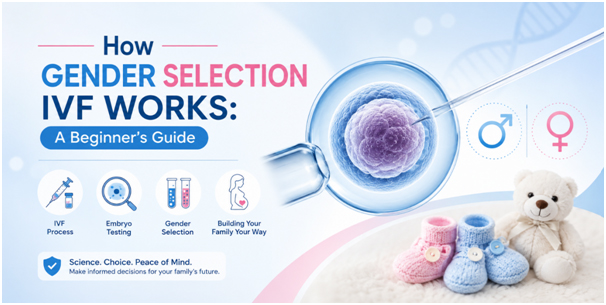
If you have ever wondered whether it is possible to choose the sex of your baby before pregnancy, you are not alone. Many families in Dubai are now exploring this option, and gender selection IVF has become one of the most discussed advancements in reproductive medicine. Whether your reason is medical or personal, understanding how this process works can help you make an informed decision.
This guide breaks everything down in simple, clear language. It covers what gender selection IVF is, how it works step by step, who it is for, and what to expect when you visit a fertility clinic in Dubai.
What Is Gender Selection IVF?
Gender Selection IVF is a fertility treatment that allows parents to choose the biological sex of their child before the embryo is transferred to the womb. It combines two well-established procedures: in vitro fertilization (IVF) and preimplantation genetic testing (PGT).
First, eggs are fertilized in a lab to create embryos. Then, those embryos are tested for their chromosomal makeup. Since chromosomes determine biological sex — XX for female and XY for male — this testing can identify which embryos are female and which are male. Finally, the parents and their doctor choose which embryo to transfer.
This process is far more precise than older, less reliable methods. It is based on real genetic science, not guesswork.
Why Do People Choose Gender Selection?
People pursue gender selection for different reasons. Understanding those reasons helps explain why this treatment has grown so much in popularity.
Medical reasons are one of the most common motivations. Some genetic conditions — like Duchenne muscular dystrophy or hemophilia — are far more likely to affect children of one sex. In these cases, gender selection helps families avoid passing on a serious illness to their child.
Family balancing is another major reason. Many couples who already have children of one sex hope to have a child of the other. This is especially common among families in Dubai and across the wider region, where cultural and family values around lineage are particularly significant.
Personal preference also plays a role for some people. Clinics like Best Life Fertility Center in Dubai approach every case with compassion and without judgment, ensuring that each family receives care tailored to their unique situation.
The Step-by-Step Process of Gender Selection IVF
Understanding the process makes it far less intimidating. Here is how it typically unfolds, from the first consultation to embryo transfer.
Step 1: Initial Consultation and Evaluation
Everything begins with a detailed consultation. At Best Life Fertility Center, specialists like Dr. Mazen Dayeh take the time to review your medical history, discuss your goals, and run diagnostic tests. These tests check ovarian reserve, hormone levels, sperm quality, and overall reproductive health.
This step is important because it helps the medical team create a personalized plan. Not everyone’s fertility journey looks the same, and a good clinic always starts with a thorough assessment.
Step 2: Ovarian Stimulation
Once the plan is in place, the woman begins hormone injections to stimulate her ovaries. Normally, the body releases just one egg per month. However, during IVF, the goal is to retrieve multiple eggs at once. These medications encourage the ovaries to produce several mature eggs in a single cycle.
Throughout this stage, the clinic monitors progress with blood tests and ultrasounds. This ensures the follicles — the fluid-filled sacs that contain the eggs — are developing properly. The stimulation phase usually lasts between 10 and 14 days.
Step 3: Egg Retrieval
When the eggs are ready, the doctor performs a minor surgical procedure called egg retrieval. It is done under light sedation, keeping the patient comfortable throughout. Using a thin needle guided by ultrasound, the doctor carefully collects the mature eggs from the ovaries.
Most women go home the same day and feel back to normal within 24 to 48 hours. The number of eggs retrieved can vary widely, but collecting 8 to 15 mature eggs is a common goal.
Step 4: Fertilization in the Lab
Next, the retrieved eggs are fertilized with sperm in the laboratory. The most common technique used today is called ICSI — intracytoplasmic sperm injection. In this method, a single healthy sperm is injected directly into each egg.
Over the next five to six days, the fertilized eggs develop into blastocysts, which are embryos at a stage advanced enough for genetic testing. Not every egg will successfully reach this stage, which is why retrieving multiple eggs matters.
Step 5: Preimplantation Genetic Testing (PGT)
This is the key step that makes gender selection possible. A small biopsy is taken from each blastocyst, usually just a few cells. These cells are then sent to a specialized genetics lab, where scientists analyze the chromosomes.
PGT can detect chromosomal abnormalities as well as identify the sex of each embryo. Results typically come back within one to two weeks. Importantly, this testing does not harm the embryo when done correctly.
Dr. Mazen Dayeh and the team at Best Life Fertility Center use the latest PGT technology to ensure accuracy and safety throughout this process.
Step 6: Embryo Transfer
Once the results are ready, the parents and their doctor review the findings together. They then select a healthy embryo of the desired sex for transfer. The embryo transfer itself is a simple, painless procedure that takes just a few minutes. No sedation is needed.
The embryo is placed directly into the uterus using a thin catheter. After transfer, the patient rests briefly at the clinic and then goes home. A pregnancy test is done about 10 to 14 days later to confirm whether implantation was successful.
What Are the Success Rates?
Success rates for gender selection IVF depend on several factors. These include the woman’s age, egg quality, the number of healthy embryos available, and the quality of the clinic’s lab.
Generally speaking, PGT is highly accurate in identifying embryo sex, with accuracy rates for chromosomal sex identification typically above 99%. However, the overall success of IVF — achieving a healthy pregnancy — varies more widely. For women under 35, success rates per transfer are often between 50% and 65% at high-quality clinics.
It is always wise to have a detailed conversation with your doctor about what to realistically expect based on your individual situation.
Is Gender Selection IVF Legal in Dubai?
This is a very important question for families in the UAE. Currently, gender selection in Dubai is permitted for medical reasons only — specifically to prevent the transmission of sex-linked genetic diseases. Social or personal gender selection, known as family balancing, is regulated and may not be legally performed in all cases.
Because regulations can change and individual cases vary, it is essential to consult with a licensed fertility specialist. Best Life Fertility Center follows all UAE health authority guidelines and will advise you clearly on what is permissible based on your circumstances.
What Makes Best Life Fertility Center Stand Out?
Choosing the right fertility clinic in Dubai is one of the most important decisions you will make on this journey. Best Life Fertility Center brings together advanced technology, experienced specialists, and a deeply patient-centered approach.
Dr. Mazen Dayeh is a highly regarded fertility specialist known for his expertise in IVF and reproductive genetics. His approach combines clinical precision with genuine empathy — something that makes a real difference when navigating something as personal as fertility treatment.
The center is also equipped with a state-of-the-art embryology lab and uses the latest PGT platforms to ensure the highest standards of accuracy and care. The team provides full emotional support and counseling throughout the process, because fertility journeys can be emotionally demanding.
Questions to Ask Before You Begin
Before starting gender selection IVF, it helps to go into your consultation prepared. Here are some useful questions to bring to your first appointment:
- Am I a good candidate for IVF based on my current health?
- How many embryos am I likely to get from one cycle?
- What does your PGT process involve, and how accurate is it?
- What are the legal considerations for my specific situation in Dubai?
- What happens if no healthy embryos of the desired sex are available after testing?
Asking these questions gives you a clearer picture of what to expect and helps you feel more confident as you move forward.
Final Thoughts
Gender selection IVF is a remarkable advancement in reproductive medicine. It gives families real choices — whether for health reasons or personal family planning goals. The process involves several carefully coordinated steps, from ovarian stimulation to genetic testing and embryo transfer, all carried out by experienced specialists in a modern lab setting.
If you are based in Dubai and want to explore this option, reaching out to a trusted specialist is the best first step. Best Life Fertility Center, led by Dr. Mazen Dayeh, offers expert guidance, advanced technology, and compassionate care to support you through every stage of your fertility journey.
Your path to parenthood is unique. With the right team by your side, it becomes a little clearer — and a lot less daunting.
