
In November 2024, the Department of Health in Abu Dhabi licensed the Institute for Healthier Living Abu Dhabi as the world’s first specialised healthy longevity medicine centre.
Alongside it came a set of evidence-based guidelines for longevity medicine, which the department described as the first of their kind. The move showed that regional regulators now treat the science of ageing as a field in its own right.
Behind clinics like this sits a much larger body of laboratory work on why cells and tissues wear out in the first place. The research of peptides is quite important here, especially for practical reasons.
A peptide is a short chain of amino acids. These are the same building blocks that make up proteins, just far fewer of them. The body already relies on peptides as chemical messengers, and insulin is a familiar example.
As they are small and usually act on one target, researchers can design or adapt them to nudge a single process and then measure what changes. For ageing research, where dozens of processes overlap, that accuracy is very useful.
Much of that work happens at the bench, in cell cultures and animal models, using synthetic compounds made to a stated purity.
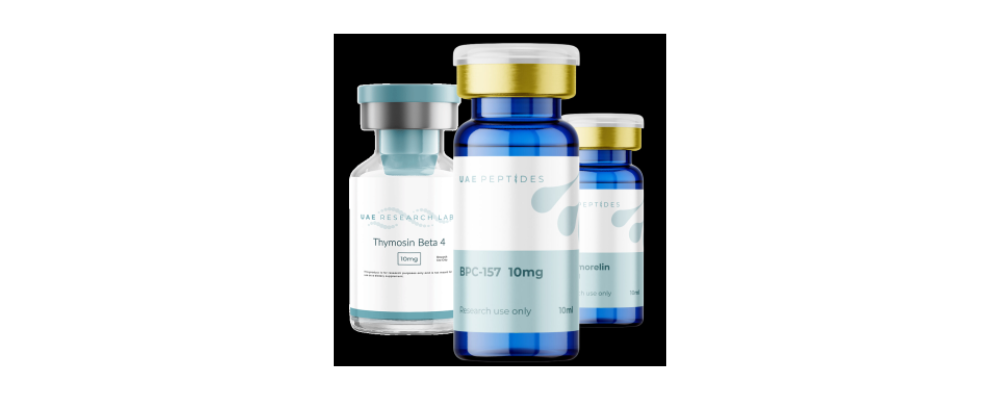
Here in the UAE, researchers can source uae research peptides supplied with batch-specific testing and documentation.
The appeal is easy to understand. What the published studies actually show is more varied across different compounds.
A 2023 paper is a good place to start when trying to understand the role of peptides in longevity research.
Carlos López-Otín and colleagues expanded their list of the “hallmarks of ageing” from 9 to 12.
These are the biological processes thought to drive ageing, such as the gradual shortening of telomeres (protective caps on the ends of chromosomes) and the decline of mitochondria.
The list gives researchers defined targets, and peptides suit that approach because many of them act on one pathway at a time.
Epitalon is a very good example of a peptide involved within longevity research. It is a chain of 4 amino acids and traces back to epithalamin, an extract taken from the pineal gland of cattle, and was made as a synthetic copy of what researchers believed to be the extract’s active part.
Most of what is known about it comes from one institution. Professor Khavinson and colleagues at the St Petersburg Institute of Bioregulation and Gerontology spent many years studying short peptides of this type, which they grouped under the name “peptide bioregulators”.
In their published reviews, they describe these compounds as geroprotectors, a term for substances thought to slow ageing.
The reason why Epitalon is linked so closely with longevity research is because of its association to telomeres.
Each time a cell divides, those protective caps get a little shorter, and once they are too short the cell stops dividing altogether. An enzyme called telomerase can add length back, but most adult cells keep it largely switched off.
Khavinson’s group reported that Epitalon switched telomerase on in cultured human fibroblasts, the cells that make connective tissue. The treated cells lengthened their telomeres and kept dividing well beyond the point where untreated cells stopped.
A further study led by Vladimir Anisimov with Khavinson gave female mice Epitalon in short monthly courses from three months of age until natural death. Average lifespan did not change. The longest-lived tenth of the treated group, however, lived 13.3% longer than the same slice of the control group, and chromosome damage in bone marrow cells fell by about 17%.
Overall tumour rates were the same in both groups, though leukaemia was far less common in the treated mice.
Abu Dhabi has already done something few health systems have tried, writing formal rules for clinics built around longevity. Rules like that tend to arrive before the science is finished, and the peptide work coming out of laboratories will be one of the things that test them.
Some compounds will hold up under independent study and some will not. Either way, Abu Dhabi has set out early what it expects of longevity medicine, and the laboratory evidence now has a clearer standard to meet.

